How to Reduce Chargebacks: 7 Prevention Tactics That Work
Reduce chargebacks by preventing disputes before they are filed. Here are seven prevention tactics, from a clear billing descriptor and fraud tools to prevention alerts and representment.
To reduce chargebacks, prevent disputes before they are filed. Use a clear billing descriptor and screen orders with AVS, CVV and 3-D Secure. Make refunds and support easy to reach, and keep delivery proof. Enroll in chargeback-prevention alerts, and fight recoverable disputes with representment. Prevention costs far less than losing the sale.
How can you reduce chargebacks?
You reduce chargebacks by stopping disputes at the source. Combine a recognizable billing descriptor, fraud screening with AVS, CVV and 3-D Secure, easy refunds and responsive support, proactive order and shipping communication, chargeback-prevention alerts, and disciplined representment on recoverable cases. Each tactic removes a common reason a cardholder disputes a charge.
Most chargebacks are avoidable. They come from a short list of recurring triggers: a statement descriptor the buyer does not recognize, a criminal transaction that should never have settled, an order that felt slow or silent, or a refund the customer could not get quickly enough. Fixing those triggers costs less than fighting disputes after the fact, because a chargeback adds a fee and counts toward the chargeback ratio that acquirers and card networks watch. The seven tactics below map to those triggers, ordered by how much avoidable dispute volume each tends to remove.
Seven tactics to reduce chargebacks
These seven tactics map to the most common dispute triggers, ordered from the highest-volume prevention levers to dispute defense. Clear descriptors and fraud screening stop the most volume, while alerts and representment recover what still slips through, so start at the top of the list and work down as your dispute mix changes.
- 1Use a clear billing descriptor
Set a descriptor that matches the brand the customer bought from, so the charge is recognized on the statement. Add a support phone or URL where allowed, and keep it consistent across the initial charge and any rebills. Non-recognition is a leading cause of avoidable disputes.
- 2Screen orders with fraud tools and 3-D Secure
Apply AVS to match the billing address, CVV to confirm card possession, 3-D Secure (3DS2) to shift liability to the issuer on authenticated payments, and real-time fraud scoring to flag risky orders before capture rather than after a dispute.
- 3Make refunds and support easy to reach
Publish the refund and cancellation policy where buyers can find it, answer support quickly, and empower staff to refund before a complaint escalates. A refund before a dispute is cheaper and does not count against the chargeback ratio.
- 4Communicate proactively across the order lifecycle
Send order confirmations, shipping notifications with tracking, and clear renewal reminders for subscriptions. Proactive messaging cuts item-not-received and recurring-billing disputes, and every message becomes representment evidence.
- 5Keep delivery proof and transaction evidence
Retain tracking and proof of delivery, the AVS and CVV results, the 3-D Secure record, the customer's authorization, and support correspondence. Organized evidence shortens representment and raises the odds of a favorable ruling.
- 6Enroll in chargeback-prevention alerts
Alert networks notify the merchant when a cardholder initiates a dispute or reports fraud, opening a short window to refund the transaction and stop fulfillment before the chargeback posts and counts against your ratio.
- 7Fight recoverable disputes with representment
Contest illegitimate chargebacks by resubmitting the transaction with evidence tied to the specific reason code: delivery proof for not-received, the authentication record for fraud, the listing details for not-as-described. Meet the network deadline, because a late or evidence-light response is a lost case.
Chargeback-reduction checklist
Use this checklist to reduce chargebacks systematically. It groups the seven tactics into prevention, communication, and dispute defense, so a merchant can audit each layer against the disputes it removes. Descriptor and fraud screening stop the most volume, while alerts and representment recover what slips through.
| Layer | Action | Chargeback triggers it removes |
|---|---|---|
| Prevention | Set a recognizable billing descriptor with a support contact | Non-recognition, unclear-descriptor disputes |
| Prevention | Enable AVS and CVV checks on every order | Card-not-present fraud |
| Prevention | Apply 3-D Secure (3DS2) authentication | Fraud liability, unauthorized-transaction disputes |
| Prevention | Run real-time fraud scoring before capture | Criminal fraud, high-risk orders |
| Communication | Send order, shipping and delivery confirmations | Item not received disputes |
| Communication | Send subscription renewal reminders and easy cancellation | Recurring-billing and friendly-fraud disputes |
| Support | Publish a visible refund path and responsive support | Complaints that would otherwise become disputes |
| Dispute defense | Retain delivery proof and transaction evidence | Weak or lost representment cases |
| Dispute defense | Enroll in chargeback-prevention alerts | Disputes that could be refunded before posting |
| Dispute defense | File representment on recoverable disputes, matched to the reason code | Friendly fraud, unrecovered revenue |
| Compliance | Process with a PCI DSS Level 1 provider | Data-breach fraud that drives chargebacks |
How do subscription and high-risk merchants keep the chargeback ratio low?
Subscription and high-risk merchants keep the chargeback ratio low by layering every prevention tactic and pairing it with a processor built for recurring billing. Mainstream platforms like Stripe and PayPal often freeze or close accounts once disputes climb, so a subscription-ready account with real prevention tooling is what keeps the business processing.
Merchants in categories such as nutraceuticals and supplements, health and wellness subscriptions, telehealth and GLP-1, crypto, and iGaming tend to see higher dispute rates, and card networks watch those accounts more closely. Crossing a network's chargeback threshold can push a business into a monitoring program or off a processor entirely. For these merchants, prevention is not optional, and the processor relationship matters as much as the tactics.
SwissPay.ai is built for this. As a PayPal-managed payment facilitator operated by MintAds Inc., SwissPay boards and underwrites merchants in-house on PayPal rails, so merchants do not need their own PayPal account, and payments are processed on PayPal, one of the most established payment networks on the internet. SwissPay is built for subscriptions, rebills, and trials, with card and PayPal-wallet vaulting for recurring billing. Accounts come with chargeback tooling: real-time fraud scoring that weighs address (AVS), device, and risk signals, 3-D Secure 2 where required, and chargeback and PayPal dispute handling with automated evidence submission. SwissPay is also a PCI DSS Level 1 Service Provider. SwissPay does not guarantee approval or a specific outcome; it gives subscription and higher-risk merchants these tools alongside the tactics above, which remain the merchant's own job.
Fighting a rising dispute rate?
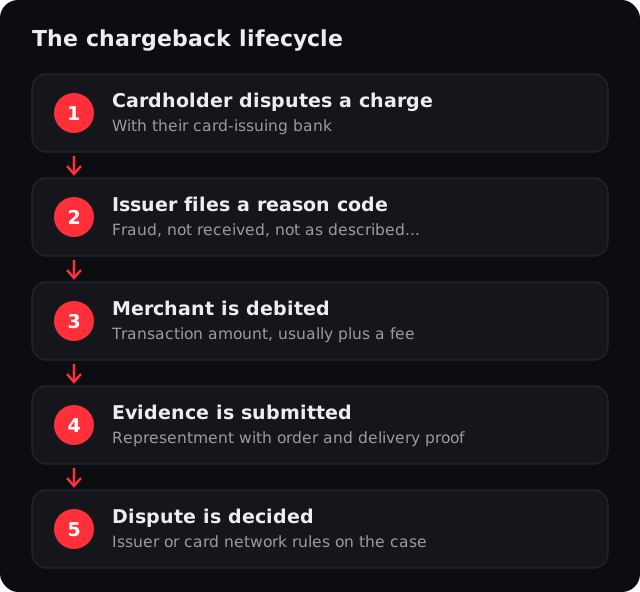
See how SwissPay approaches chargeback prevention and high-risk merchant accounts, or read what a chargeback is to understand the dispute lifecycle first. No guaranteed-approval promises.
Start my applicationRelated
Frequently asked questions
How do I reduce chargebacks fast?
What is the single biggest cause of avoidable chargebacks?
Does 3-D Secure reduce chargebacks?
What are chargeback-prevention alerts?
How do I lower my chargeback ratio if it is already high?
Can representment reduce my chargeback count?
Apply for a merchant account
Tell us about your business. One application, boarded and underwritten in-house on PayPal rails, with card and PayPal-wallet processing built for subscriptions.
- Boarded and underwritten in-house, no separate PayPal account needed
- Card and PayPal-wallet vaulting for subscriptions, trials and rebills
- PCI DSS Level 1, 3-D Secure 2 where required, and chargeback and dispute handling built in